
Gloss vs Matt Tiles Explained: Complete Guide UK
Gloss vs Matt Tiles Explained: Complete Guide UK
Gloss vs Matt Tiles: Choosing the right tile finish can completely transform a british home’s atmosphere and upkeep. While gloss and matt tiles may appear similar, each offers unique benefits that matter in daily life. For example, gloss tiles can brighten a space by reflecting light, but matt tiles often outperform in high-traffic areas due to their slip resistance and ability to hide dirt. Understanding the real differences between these two finishes can help you make smart choices for both design and practicality.
Table of Contents
- Gloss vs Matt Tiles Defined and Compared
- Visual Appeal and Design Suitability
- Practicality, Durability, and Maintenance Needs
- Recommended Rooms and Application Scenarios
- Cost, Installation, and Common Buying Mistakes
Key Takeaways
| Point | Details |
|---|---|
| Gloss tiles create a sense of luxury | Their highly reflective surface enhances light and spatial perception, making them ideal for modern, minimalist designs. |
| Matt tiles offer practicality | These tiles are more forgiving in high-traffic areas due to better slip resistance and lower maintenance requirements. |
| Tile choice should match room function | Choose gloss for bright, contemporary spaces and matt for intimate or high-traffic areas to optimise both aesthetics and functionality. |
| Consider long-term costs | Gloss tiles may have lower upfront costs but higher maintenance, while matt tiles provide a more practical long-term investment. |
Gloss vs Matt Tiles Defined and Compared
When selecting tiles, the finish can dramatically transform your space’s aesthetic and functionality. Gloss and matt tiles represent two distinctive surface treatments that offer unique characteristics for different interior design approaches. While they might seem similar at first glance, these finishes create remarkably different visual and practical experiences.
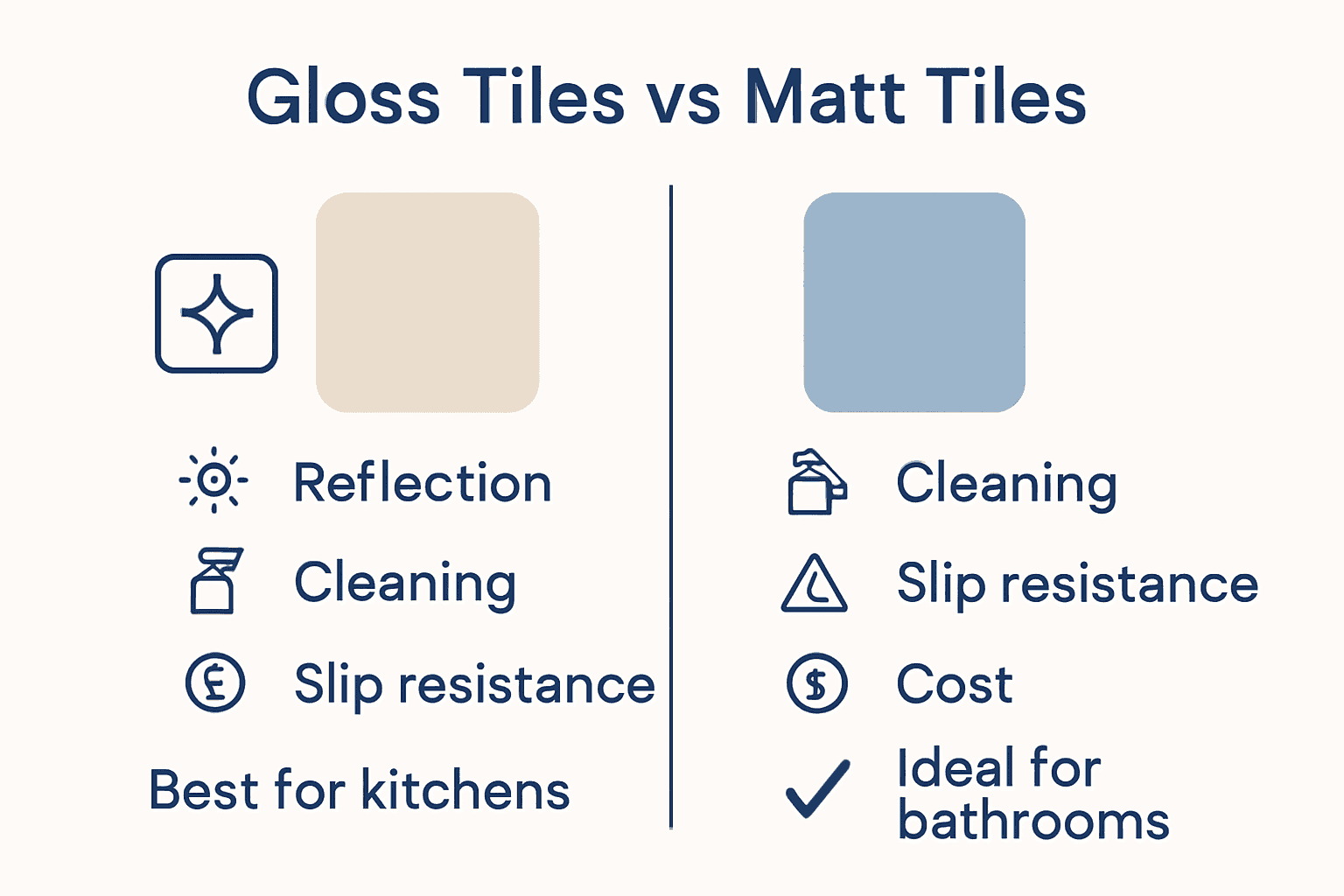
Gloss tiles feature a highly reflective, shiny surface that bounces light and creates a sense of expansiveness in a room. These tiles have a smooth, polished appearance that instantly adds sophistication and brightness. They’re particularly effective in smaller spaces or areas with limited natural light, as their reflective qualities can make rooms feel larger and more luminous. However, gloss tiles do show fingerprints, watermarks, and smudges more prominently, which means they require more frequent cleaning to maintain their pristine appearance.
Matt tiles, in contrast, present a subdued, non-reflective surface with a more understated and contemporary feel. These tiles absorb light rather than reflect it, creating a softer, more muted aesthetic. Their textured finish provides better slip resistance and effectively conceals dirt, dust, and minor imperfections. For high-traffic areas like kitchens, bathrooms, or entryways, matt tiles offer superior practicality, as they’re more forgiving with daily wear and tear.
Ultimately, the choice between gloss and matt tiles depends on your specific design goals, room characteristics, and lifestyle requirements. Consider factors like room size, lighting conditions, foot traffic, and maintenance preferences when making your selection.
 Both finishes have their strengths: gloss tiles bring drama and light, while matt tiles offer understated elegance and practicality.
Visual Appeal and Design Suitability
Interior design aesthetics play a crucial role in selecting between gloss and matt tiles, with each finish offering distinctive visual characteristics that can dramatically transform a space’s overall ambiance. The choice between these finishes goes far beyond mere surface appearance, touching on deeper principles of spatial perception, light interaction, and architectural style.
Gloss tiles excel in creating a sense of luxury and drama. Their highly reflective surface acts like a visual amplifier, bouncing light around the room and creating an illusion of increased space. They’re particularly stunning in modern, minimalist interiors, where their sleek and polished appearance can create striking visual statements. Contemporary kitchens, high-end bathrooms, and sophisticated living spaces often leverage gloss tiles to introduce a sense of elegance and sophistication. Ceramic tiles with gloss finishes work exceptionally well in spaces seeking a bold, contemporary aesthetic.
Matt tiles, by contrast, offer a more understated and organic design approach. Their non-reflective surface provides a softer, more muted visual experience that feels grounded and authentic. These tiles are ideal for creating warm, inviting spaces that prioritize comfort and natural texture. Rustic kitchens, industrial-style bathrooms, and minimalist living areas often benefit from matt tile finishes, which blend seamlessly with natural materials like wood, stone, and concrete. The subdued aesthetic of matt tiles helps create visual depth and complexity without overwhelming the space.
When considering design suitability, it’s essential to evaluate the specific context of your project. Large, bright spaces might benefit from the dynamic quality of gloss tiles, while smaller, more intimate areas could feel more balanced with the subtle elegance of matt tiles. Your choice should harmonise with existing architectural elements, furniture styles, and the overall mood you wish to create in the room.
Practicality, Durability, and Maintenance Needs
The practical considerations of tile finishes extend far beyond their initial aesthetic appeal, encompassing critical aspects of long-term performance, cleaning requirements, and overall durability. Understanding the nuanced maintenance needs of gloss and matt tiles can significantly impact your decision-making process and future satisfaction with your tiling choice.
Gloss tiles, while visually stunning, present unique maintenance challenges. Their highly reflective surface acts like a magnifying glass for imperfections, meaning every fingerprint, water spot, and smudge becomes immediately visible. Frequent cleaning is essential to maintain their pristine appearance, typically requiring specialized cleaning solutions and microfibre cloths to prevent scratching. Ceramic tiles with gloss finishes demand more rigorous and consistent maintenance to preserve their high-shine aesthetic, making them less practical for high-traffic or busy household areas.
Matt tiles offer substantially more practical advantages in terms of maintenance and durability. Their textured, non-reflective surface naturally camouflages dirt, dust, and minor scratches, making them significantly more forgiving in everyday use. These tiles excel in areas subject to heavy foot traffic, such as kitchens, hallways, and entryways, where their robust nature can withstand constant wear and tear. The surface texture also provides enhanced slip resistance, an additional safety benefit particularly important in wet areas like bathrooms and utility rooms.
When evaluating practicality, homeowners should consider their specific lifestyle, cleaning habits, and environmental conditions. High-humidity environments, homes with children or pets, and spaces prone to frequent splashes and spills might benefit more from matt tiles’ low-maintenance characteristics. Conversely, spaces prioritizing visual drama and willing to invest time in meticulous upkeep might find gloss tiles more appealing. The key is matching your tile finish not just to your aesthetic preferences, but to your practical living requirements.
Recommended Rooms and Application Scenarios
Selecting the appropriate tile finish requires a nuanced understanding of how surface characteristics interact with different room environments and functional requirements. The choice between gloss and matt tiles is not just aesthetic but deeply practical, with each finish offering unique advantages for specific spaces within your home or commercial setting.
In bathrooms and wet areas, matt tiles emerge as the clear frontrunner. Their textured surface provides superior slip resistance, crucial for preventing accidents in potentially wet environments. Polished or matt tile selections can dramatically impact room functionality, with matt finishes offering enhanced safety and visual concealment of water spots and soap residue. Shower enclosures, bathroom floors, and wet room installations benefit tremendously from matt tiles’ practical attributes, creating safer and more low-maintenance environments.
Living spaces and areas with controlled traffic present more flexible opportunities for tile selection. Contemporary kitchens with sleek, minimalist designs often leverage gloss tiles to create a sense of depth and light reflection. Spacious, well-lit living areas can incorporate gloss tiles as feature walls or splashbacks, introducing drama and visual intrigue. Conversely, high-traffic zones like hallways, entryways, and family rooms typically favour matt tiles for their ability to mask everyday wear, dirt, and minor imperfections. These spaces demand resilience and practicality, making matt finishes an intelligent choice for households with children, pets, or frequent foot traffic.
Commercial and professional environments require additional considerations. Retail spaces, restaurants, and office settings might strategically use a combination of gloss and matt tiles to define different functional zones. Gloss tiles can create focal points and enhance perceived spaciousness, while matt tiles provide practical, low-maintenance surfaces in high-activity areas. The ultimate selection should balance aesthetic aspirations with the specific performance requirements of each unique space, considering factors like lighting, foot traffic, cleaning protocols, and overall design language.
Cost, Installation, and Common Buying Mistakes
Navigating the world of tile selection involves more than just aesthetic preferences—financial considerations and installation complexities play pivotal roles in making an informed purchasing decision. Understanding the nuanced cost implications and potential pitfalls can save homeowners significant time, money, and frustration during their tiling project.
According to Get Tiles Online, gloss tiles can be more affordable initially, but their suitability varies dramatically across different applications. While they might present a lower upfront cost, the long-term maintenance and potential replacement expenses can offset initial savings. The installation process for gloss tiles requires meticulous preparation, as any substrate imperfections become glaringly apparent through their reflective surface. Professional installers typically charge a premium for gloss tile installations due to the heightened precision required, potentially increasing overall project costs.
Common buying mistakes often stem from overlooking critical practical considerations. Homeowners frequently select tiles based solely on appearance without considering critical factors like slip resistance, particularly in wet areas. Matt tiles generally offer superior traction and are more forgiving in high-traffic zones, making them a more practical long-term investment. When budgeting, it’s crucial to factor in not just the tile cost, but also preparation, adhesive, grouting, and potential professional installation expenses. A comprehensive approach involves calculating the total project cost, including potential future maintenance and replacement expenses.
To avoid costly errors, potential buyers should prioritize thorough research and hands-on evaluation. Visit tile showrooms, request multiple samples, and test tiles in lighting conditions similar to your intended space. Consider purchasing extra tiles—approximately 10% more than your measured area—to account for cuts, breakages, and future repairs. Consulting with professional tilers can provide invaluable insights into which finish best suits your specific environment, potentially saving you from expensive mistakes and ensuring a result that balances aesthetic appeal with long-term functionality.
Choose the Perfect Tile Finish for Your Project with Vivido Tiles
Choosing between gloss and matt tiles can feel overwhelming given their distinct aesthetic and practical qualities. Whether you want the elegant brightness of gloss tiles or the durable, slip-resistant charm of matt finishes, getting it right matters for your space’s long-term look and function. This article helps you understand these crucial differences so you can avoid costly mistakes and select tiles that truly meet your needs.

Explore our wide selection of premium tiles at Vivido Tiles where you will find everything from porcelain gloss tiles perfect for brightening rooms to matt tiles designed for high-traffic and wet areas. Take advantage of our expert guidance, budget-friendly pricing, and free UK delivery to make your renovation or design project seamless. Visit our showroom in Harrogate or browse online to find the ideal tile finish that balances style with practical living everyday. Start your confident tile journey now and transform your home with tiles that suit your lifestyle perfectly.
Frequently Asked Questions
What are gloss tiles?
Gloss tiles have a highly reflective, shiny surface that enhances light in a room, creating a sense of space and elegance.
What are the advantages of using matt tiles?
Matt tiles offer a non-reflective surface that is more forgiving with dirt and imperfections, providing better slip resistance and lower maintenance in high-traffic areas.
Which tiles are better for high-traffic areas, gloss or matt?
Matt tiles are generally better for high-traffic areas because their textured surface helps conceal dirt and provides enhanced slip resistance.
How do maintenance needs differ between gloss and matt tiles?
Gloss tiles require more frequent cleaning to maintain their shine and are prone to showing fingerprints and smudges, while matt tiles are more forgiving and easier to clean, making them lower maintenance overall.