
Natural Stone Tile: Everything You Need to Know
The story of natural stone tile stretches back thousands of years, linking modern homes to the rich legacy of ancient architecture. Natural stone tiles are crafted straight from the earth, each cut revealing unique patterns shaped over centuries. Homeowners and designers value these tiles for their timeless look and impressive durability. If you are curious about the origins and distinct beauty of natural stone tile, understanding its history and features will help you make inspired choices for any space.
Table of Contents
- What Is Natural Stone Tile? Definition and Origins
- Popular Types of Natural Stone Tile Explained
- Key Features and Benefits of Stone Tiles
- Installation and Maintenance Requirements
- Comparing Natural Stone to Tile Alternatives
- Common Pitfalls When Buying Stone Tiles
Key Takeaways
| Point | Details |
|---|---|
| Natural Stone Definition | Natural stone tiles are made from naturally occurring stone formations, offering durability and unique visual properties that enhance design aesthetics. |
| Types and Characteristics | Common types include limestone, marble, granite, and slate, each providing distinctive appearances and functional benefits suitable for various spaces. |
| Installation and Maintenance | Proper installation by professionals is recommended, and regular maintenance is crucial to preserve the longevity and beauty of stone tiles. |
| Cost Considerations | Natural stone tiles often represent a higher investment compared to alternatives like porcelain, but they provide unique character and potential long-term value when maintained appropriately. |
What Is Natural Stone Tile? Definition and Origins
Natural stone tile represents an extraordinary building material with roots stretching back thousands of years, offering homeowners and designers a connection to geological history and timeless aesthetic appeal. Natural stone tiles are precisely what their name suggests: flooring and wall covering materials carved directly from naturally occurring stone formations extracted from quarries around the world.
According to stonefed.org.uk, natural stone has been a fundamental construction material for millennia, encompassing diverse materials like limestone, sandstone, and slate. Each stone type carries unique geological characteristics and visual properties that make it distinct. The origins of these tiles trace back to ancient civilizations that recognized stone’s remarkable durability and aesthetic potential.
Natural stone tiles emerge through a sophisticated extraction and processing method. Quarry workers carefully remove massive stone blocks from geological formations, which are then precision cut into uniform tiles. The resulting materials offer remarkable variations:
- Limestone: Soft, sedimentary stone with gentle colour variations
- Marble: Metamorphic stone with dramatic veining and luxurious appearance
- Slate: Dense, rugged stone with striking layered textures
- Travertine: Sedimentary stone with distinctive porous surface characteristics
Interested in exploring more about these fascinating materials? Check out our guide on natural stone tiles to discover their incredible design potential and practical applications.
Popular Types of Natural Stone Tile Explained
Natural stone tiles offer an extraordinary range of design possibilities, each with distinct characteristics that can transform spaces from ordinary to extraordinary. According to constructionmaguk.co.uk, these tiles encompass multiple types, including limestone, granite, marble, and slate, providing homeowners with diverse aesthetic and functional options.
Let’s explore the most popular natural stone tile varieties:
Limestone
Limestone represents a soft, sedimentary stone with gentle, neutral colour palettes. These tiles typically feature subtle beige, cream, and grey tones, making them incredibly versatile for various design schemes. They work exceptionally well in spaces seeking a calm, understated elegance.
Marble
Marble epitomises luxury and sophistication. Characterised by dramatic veining and rich colour variations, marble tiles create stunning visual statements. From pristine white to deep emerald green, marble offers unparalleled aesthetic drama and timeless appeal.
Granite
Known for exceptional durability, granite tiles provide robust performance alongside striking visual texture. These dense, crystalline stones resist scratching and maintain their appearance under heavy traffic, making them perfect for high-use areas like kitchen floors and entryways.
Slate
Slate delivers a rugged, natural aesthetic with its distinctive layered texture and deep, earthy colour palette. These tiles are particularly popular for creating rustic, organic design environments and excel in outdoor and interior applications.
When considering your French Pattern Travertine tiles, remember that each stone type brings unique characteristics to your design palette. Understanding these variations helps you make informed decisions that align with your aesthetic and functional requirements.
Key Features and Benefits of Stone Tiles
Natural stone tiles are more than just a design choice—they’re an investment in timeless beauty and exceptional functionality. According to marblerestorations.co.uk, these remarkable materials offer unique characteristics with varying performance levels that can dramatically transform interior and exterior spaces.
Durability and Longevity
One of the most compelling advantages of natural stone tiles is their extraordinary durability. Unlike synthetic materials, stone tiles can withstand decades of use while maintaining their aesthetic appeal. Different stone types provide varying levels of hardness and resistance:

- Granite: Extremely dense and scratch-resistant
- Slate: Robust with excellent wear characteristics
- Marble: Softer but still capable of lasting generations with proper maintenance
Aesthetic Versatility
Natural stone tiles bring unparalleled design flexibility. Their inherent variations in colour, texture, and pattern mean no two installations look exactly alike. This unique quality allows homeowners to create truly distinctive environments that reflect personal style and architectural vision.
Environmental and Health Benefits
Stone tiles offer remarkable environmental credentials. They are:
- Naturally sourced and sustainable
- Free from harmful synthetic chemicals
- Hypoallergenic and easy to clean
- Capable of improving indoor air quality
When considering your next renovation, explore our Terrazzo Porcelain Tiles guide to understand how natural stone can elevate your living spaces with timeless elegance and practical performance.
Installation and Maintenance Requirements
Natural stone tile installation requires precision, expertise, and careful planning to ensure long-lasting performance and aesthetic appeal. According to tiles.org.uk, these materials demand specific adhesives and grouts, with some stones being highly porous and requiring meticulous sealing to prevent moisture absorption and staining.
Professional vs DIY Installation
While some confident DIY enthusiasts might attempt stone tile installation, professional installation is often recommended. Professionals understand the nuanced requirements of different stone types, ensuring:
- Proper substrate preparation
- Correct adhesive selection
- Precise cutting and alignment
- Appropriate grouting techniques
Sealing and Protection
Sealing is crucial for natural stone tiles. Different stone types require different sealing approaches:
- Limestone: Requires frequent sealing due to high porosity
- Granite: More dense, needs less frequent sealing
- Marble: Needs specialized sealants to prevent etching
Maintenance Strategies
Regular maintenance helps preserve the beauty and integrity of stone tiles:
- Clean spills immediately
- Use pH-neutral cleaning solutions
- Avoid abrasive cleaning tools
- Reseal periodically as recommended
For those interested in comprehensive tile care, explore our feature wall tiles collection to understand how different stone types might fit your specific maintenance needs.
Comparing Natural Stone to Tile Alternatives
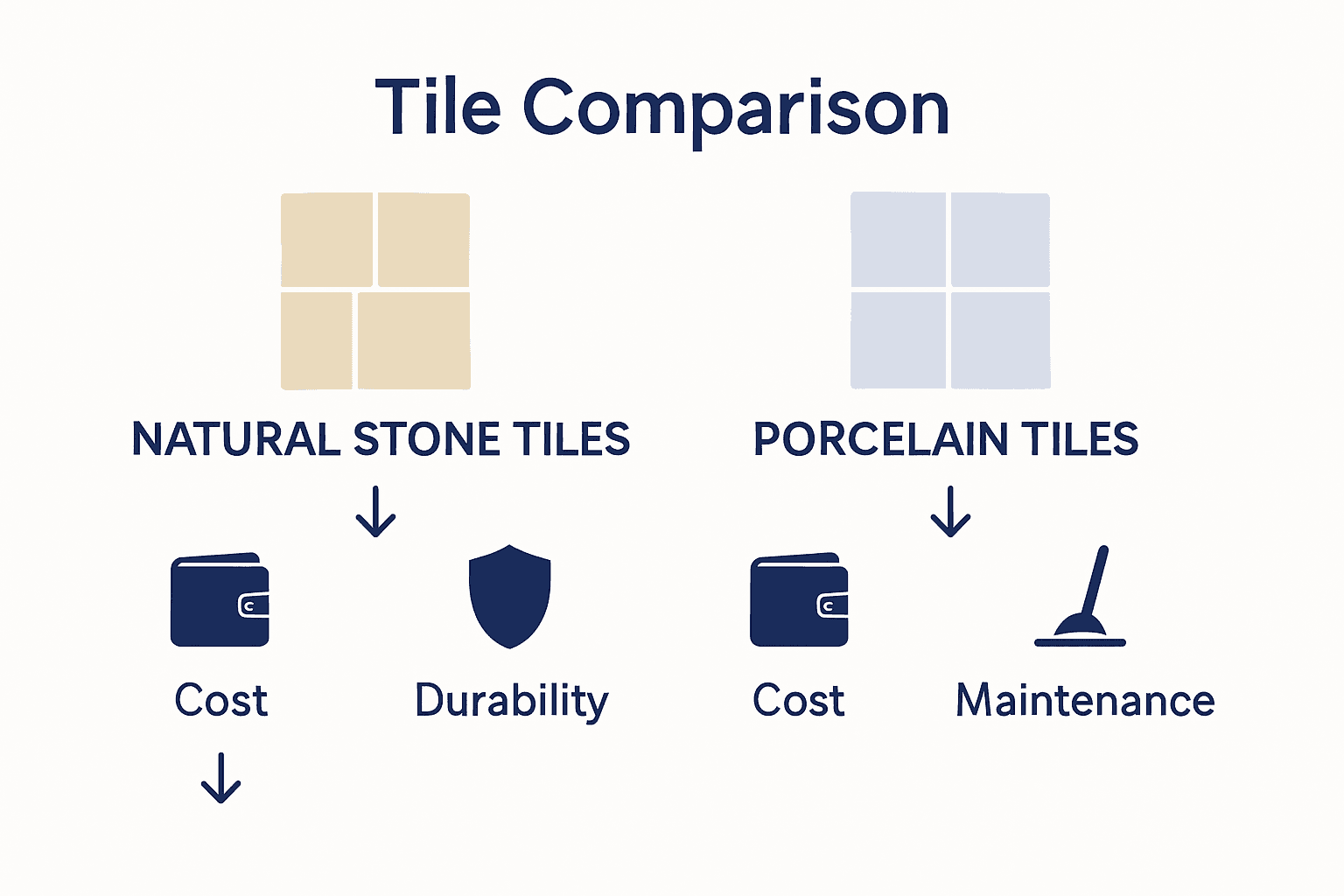
Tile selection is a critical decision in any design project, with each material offering unique advantages and limitations. According to constructionmaguk.co.uk, porcelain and natural stone tiles represent two compelling options with distinctly different characteristics, particularly in terms of durability, maintenance, and aesthetic appeal.
Performance Comparison
When evaluating tile alternatives, key performance metrics emerge:
Porcelain Tiles
- Exceptional water resistance
- High durability
- Consistent manufacturing
- Lower maintenance requirements
- More affordable
Natural Stone Tiles
- Unique aesthetic variations
- Premium visual appeal
- Higher maintenance needs
- Natural imperfections
- Greater design complexity
Cost and Longevity
Natural stone tiles typically represent a more significant investment. While porcelain offers predictable performance at a lower price point, stone tiles provide unparalleled character and potential long-term value when properly maintained.
Aesthetic and Practical Considerations
The choice between porcelain and natural stone depends on specific project requirements. High-traffic areas might benefit from porcelain’s resilience, while feature spaces could be transformed by stone’s distinctive beauty.
To explore more about tile selection strategies, check out our guide to kitchen tiles and discover how different materials can elevate your design vision.
Common Pitfalls When Buying Stone Tiles
Stone tile purchasing requires careful consideration and strategic planning to avoid costly mistakes. According to marblerestorations.co.uk, the complexity of natural stone selection involves significant price variations, with rare and exotic stones potentially incurring substantial installation costs that can equal the stone’s own price.
Budget Miscalculations
Buyers often underestimate the total investment required for natural stone tiles. Critical financial pitfalls include:
- Overlooking installation labour costs
- Failing to budget for professional sealing
- Neglecting long-term maintenance expenses
- Not accounting for potential replacement of damaged tiles
Selection and Compatibility Errors
Choosing stone tiles without comprehensive research can lead to significant design and functional challenges:
- Selecting inappropriate stone for specific environments
- Mismatching stone characteristics with usage requirements
- Ignoring substrate compatibility
- Underestimating maintenance complexity
Quality and Authenticity Concerns
Common quality-related pitfalls include:
- Purchasing from unverified suppliers
- Not checking tile grade and origin
- Failing to request material samples
- Overlooking subtle variations in stone batches
To navigate these potential challenges, explore our sealed outdoor tiles guide and ensure you make an informed, confident stone tile selection for your project.
Discover Timeless Beauty with Natural Stone Tiles from Vividotiles
Choosing the perfect natural stone tile involves balancing durability, aesthetic appeal, and proper maintenance—challenges explored in the article. Whether you are drawn to the elegant veining of marble or the rugged charm of slate, selecting the right tile that fits your lifestyle and space requirements can feel overwhelming. You want a solution that not only enhances your home but also stands the test of time with minimal fuss.
At Vividotiles, we understand these concerns. Our extensive collection of premium natural stone tiles offers carefully selected options that combine beauty with lasting performance. Enjoy affordable prices, detailed product information, and free UK delivery to make your purchase simple and confident. Explore our variety of natural stone and complementary tiles to find your ideal match tailored to your design vision.
Looking to bring the natural elegance featured in the article into your home today? Visit Vividotiles to browse our selection or start with our guide on natural stone tiles for inspiration and expert advice.

Elevate your space with stunning, quality tiles that last. Shop now at https://vividotiles.co.uk and transform your vision into reality with ease and confidence.
Frequently Asked Questions
What are natural stone tiles made of?
Natural stone tiles are made from naturally occurring stone formations such as limestone, marble, granite, and slate, harvested from quarries worldwide.
What are the benefits of using natural stone tiles?
Natural stone tiles offer durability, aesthetic versatility, and environmental advantages, such as being non-toxic and hypoallergenic. They can last for decades and provide unique design elements to any space.
How should I maintain natural stone tiles?
To maintain natural stone tiles, clean spills immediately, use pH-neutral cleaning solutions, avoid abrasive tools, and seal the tiles regularly according to the specific stone type’s requirements.
How do natural stone tiles compare to porcelain tiles?
Natural stone tiles offer unique aesthetic variations and premium visual appeal but require more maintenance compared to porcelain tiles, which are more water-resistant, durable, and lower in maintenance needs.