
Role of Tile Edges – Ensuring Flawless Tiling Results
Every British home renovation involves choices that seem small but make a huge difference. One overlooked detail is the edge of each tile. Even a one millimeter mistake at the edge can lead to long-term water damage or an uneven floor. Understanding tile edges is vital for anyone seeking a flawless, durable finish in kitchens, bathrooms, and hallways. This guide reveals how tile edge types and treatments influence structure, appearance, and everyday durability.
Table of Contents
- Defining Tile Edges And Their Importance
- Types Of Tile Edges Explained
- Impact On Installation And Durability
- Design, Aesthetics, And Finishing Choices
- Common Mistakes With Tile Edges
Key Takeaways
| Point | Details |
|---|---|
| Importance of Tile Edges | Tile edges are crucial for structural integrity, water management, and aesthetic appeal in tiled surfaces. |
| Types of Tile Edges | Various edge profiles, such as bullnose and mitred, provide distinct advantages and should be chosen based on specific design and performance needs. |
| Impact on Installation | Well-designed tile edges enhance durability and installation quality, affecting moisture resistance and load distribution. |
| Common Mistakes | Avoid installation errors like inconsistent cutting and inadequate sealing to ensure long-lasting and effective tile surfaces. |
Defining Tile Edges and Their Importance
Tile edges are far more than decorative details - they represent critical architectural elements that determine the structural integrity, aesthetic quality, and functional performance of tiled surfaces. Structural research from the Classical Art Research Centre reveals how strategic edge design has been fundamental to tile installation techniques throughout architectural history.
At their core, tile edges serve multiple precise functions beyond simple visual appeal. They provide crucial mechanisms for tile alignment, water drainage, and surface protection. Research from Bournemouth University highlights how bevelled and moulded edges contribute substantially to tile durability and performance, transforming what might seem like minor design elements into engineering solutions.
The primary roles of tile edges can be systematically broken down into several key aspects:
- Alignment and Positioning: Ensuring precise placement and consistent spacing between tiles
- Water Management: Directing moisture away from surface interfaces
- Structural Integrity: Providing additional support and reducing potential damage points
- Aesthetic Refinement: Creating smooth transitions and professional finished appearances
Professional tilers understand that selecting appropriate edge treatments is not merely cosmetic but a strategic decision impacting long-term installation quality. Whether choosing bullnose, mitred, or bevelled edges, each profile offers distinct advantages for different architectural environments and design requirements.
Types of Tile Edges Explained
Tile edge profiles represent sophisticated design solutions that transcend mere aesthetic considerations. Architectural research from the Classical Art Research Centre demonstrates how tile edge types have evolved to address specific structural and functional requirements across different architectural contexts.
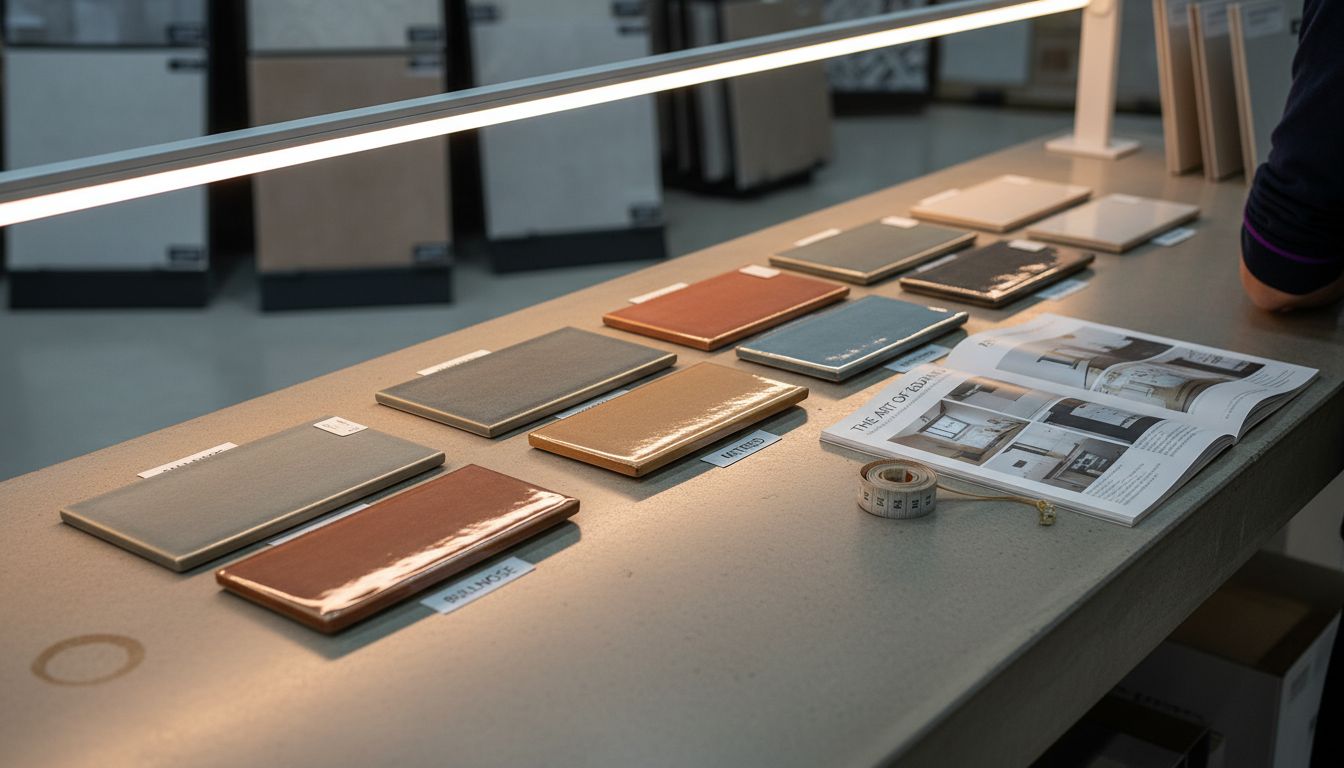
Professionals typically categorise tile edges into several fundamental types, each delivering distinct performance characteristics. Bullnose edges, for instance, feature a rounded profile that eliminates sharp corners and provides smooth transitions between surfaces. Mitred edges create seamless 45-degree angles, ideal for creating sophisticated corner treatments, while research from Bournemouth University highlights the technical nuances of bevelled and moulded edge configurations.
The primary tile edge types include:
- Straight/Squared Edges: Basic profile with clean, sharp lines
- Bullnose Edges: Rounded finish for soft transitions
- Mitred Edges: Angled treatments for precise corner formations
- Bevelled Edges: Slightly angled profile reducing sharp intersections
- Pencil Edges: Thin, delicate rounded profile
Selecting the appropriate edge type requires careful consideration of installation environment, tile material, and intended aesthetic outcome. Professional tilers understand that edge selection is not merely a cosmetic choice but a critical decision impacting long-term surface performance and visual coherence.
Impact on Installation and Durability
Research from Bournemouth University reveals that tile edge design plays a critical role in determining the long-term performance and structural integrity of tiled surfaces. The precise configuration of tile edges directly influences installation techniques, moisture resistance, and overall durability, transforming what might seem like a minor design element into a fundamental engineering consideration.
The structural implications of tile edges extend far beyond simple aesthetic choices. Archaeological insights from the Classical Art Research Centre demonstrate how raised side edges have historically been crucial in creating secure tile overlaps, preventing water penetration, and maintaining surface stability. Professional installers understand that edge design impacts several critical performance factors:
- Moisture Resistance: Preventing water infiltration between tile interfaces
- Load Distribution: Ensuring even weight distribution across tiled surfaces
- Thermal Expansion Management: Accommodating material movement and stress
- Alignment Precision: Maintaining consistent spacing and levelness
- Impact Protection: Reducing potential damage at tile edges and corners
Professional tilers recognise that edge selection is a sophisticated process involving careful assessment of environmental conditions, substrate characteristics, and intended usage. The right edge profile can significantly extend tile lifespan, reduce maintenance requirements, and ensure a flawless, professional finish that withstands the challenges of daily wear and environmental stress.
Design, Aesthetics, and Finishing Choices
Archaeological research from the Classical Art Research Centre demonstrates that tile edge design has been a sophisticated artistic expression throughout architectural history, far beyond mere functional considerations. The aesthetic choices in tile edges represent a nuanced dialogue between visual appeal, architectural context, and technical performance.
Tile edge treatments transform surface appearances by creating visual depth, texture, and architectural character. Research from Bournemouth University highlights how different edge profiles contribute dramatically to the overall aesthetic experience, turning seemingly mundane surfaces into design statements.
Designers and homeowners can explore various aesthetic strategies through edge treatments:
- Minimalist Edges: Clean, squared profiles for contemporary spaces
- Decorative Edges: Ornate, detailed treatments for traditional interiors
- Contrasting Edges: Using different edge profiles to create visual interest
- Colour-Matched Edges: Seamless integration with tile colour schemes
- Textured Edges: Adding tactile and visual complexity to surfaces
Professional interior designers understand that edge selection is not simply a technical decision but a powerful design language. The right edge treatment can elevate a space, create visual flow, and communicate sophisticated design intent through subtle architectural details.
Common Mistakes With Tile Edges
Research from Bournemouth University reveals that tile edge mistakes can dramatically compromise installation quality, turning seemingly straightforward tiling projects into potential structural nightmares. Professional tilers understand that edge treatments require meticulous attention to detail and precise technical execution.
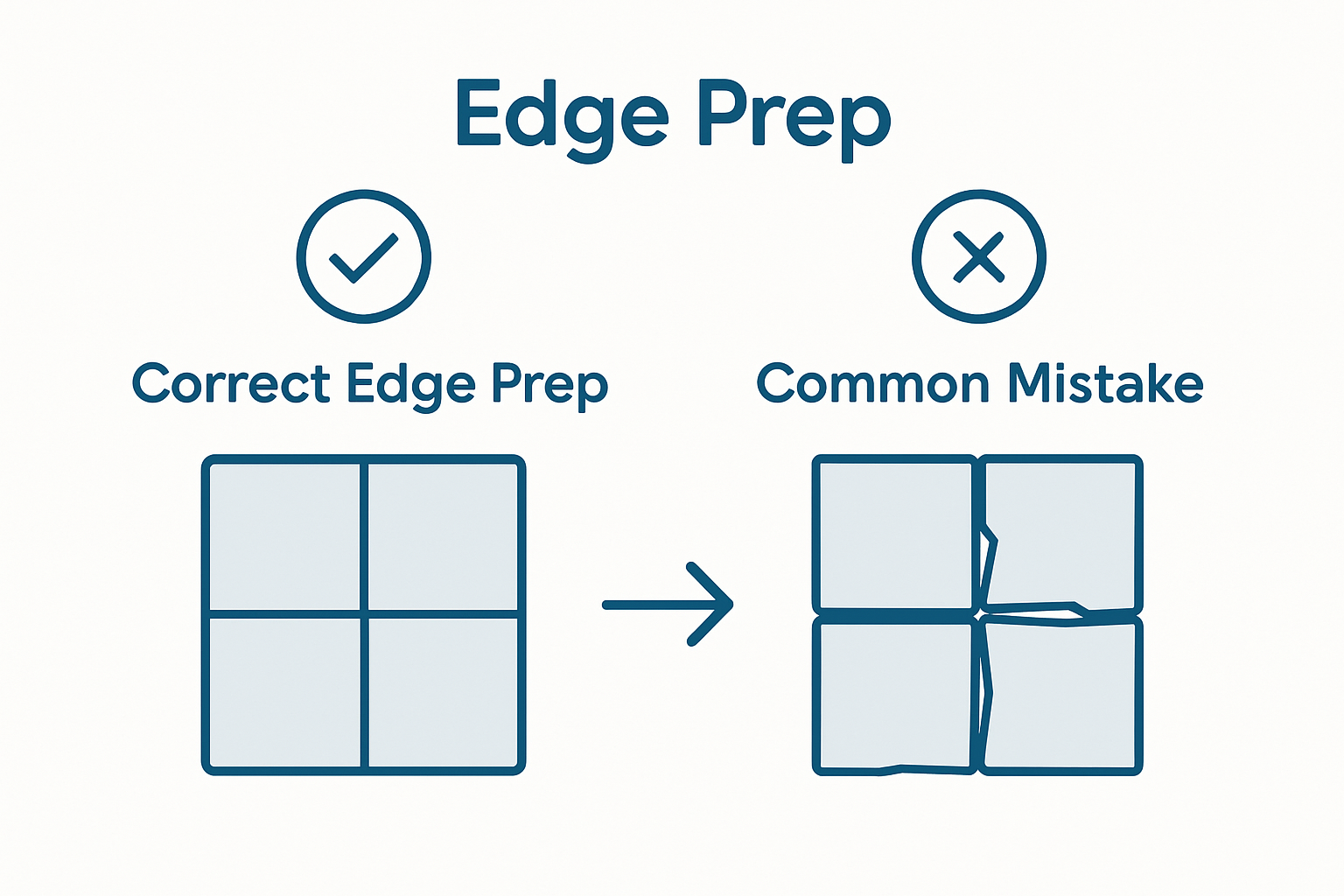
Among the most critical installation errors, uneven edge preparation stands out as a significant concern. Archaeological insights from the Classical Art Research Centre demonstrate how improper edge alignment can lead to systemic failures in surface integrity, particularly in moisture-prone environments.
The most common tile edge mistakes include:
- Inconsistent Edge Cutting: Uneven or jagged tile edges creating misalignment
- Inadequate Sealing: Leaving edges exposed to potential moisture penetration
- Incorrect Edge Profile Selection: Choosing inappropriate edges for specific environments
- Poor Grout Application: Uneven or insufficient grouting around tile edges
- Neglecting Expansion Gaps: Failing to allow for material movement and stress
Professional installers recognise that edge preparation is not a mere cosmetic step but a critical technical process. Precision, patience, and understanding of material characteristics are essential to avoiding these common pitfalls and ensuring a flawless, long-lasting tiled surface.
Achieve Flawless Tiling Results with Expert Tile Edge Solutions
Understanding the critical role of tile edges is the first step towards a durable and visually stunning installation. From alignment precision to moisture resistance, the right tile edge profile ensures your project withstands everyday wear while delivering professional aesthetics. Whether you need bullnose, mitred, or bevelled edges, selecting the appropriate tile edge can be challenging without expert guidance.

At Vivido Tiles, we offer a premium selection of tiles designed with quality and edge detail in mind. Explore our extensive range to find the perfect tile profiles that complement your design and meet technical requirements. Visit our new showroom in Harrogate for hands-on advice or shop online with confidence. Take control of your tiled surfaces today and secure a flawless finish that stands the test of time.
Frequently Asked Questions
What are the main functions of tile edges?
Tile edges serve several crucial functions including alignment and positioning, water management, structural integrity, and aesthetic refinement, contributing to the overall performance of tiled surfaces.
What types of tile edges are commonly used?
Common types of tile edges include straight/squared edges, bullnose edges, mitred edges, bevelled edges, and pencil edges, each offering distinct advantages in terms of aesthetics and functionality.
How do tile edges impact the durability of a tiled surface?
Tile edges play a critical role in determining moisture resistance, load distribution, thermal expansion management, alignment precision, and impact protection, all of which are essential for maintaining the durability and structural integrity of the tiled surface.
What are some common mistakes to avoid when installing tile edges?
Common mistakes include inconsistent edge cutting, inadequate sealing, incorrect edge profile selection, poor grout application, and neglecting expansion gaps, which can compromise the quality and longevity of the installation.