
Tile Edge Finish: Complete Guide for UK Projects
More than 60 percent of british tiling projects rely on the right edge finish to deliver a clean, durable look. Overlooking this small detail can leave tile edges vulnerable to chips and cracks, affecting both style and function. Whether you are a homeowner or a professional, understanding tile edge finishes helps transform ordinary spaces into polished, long-lasting interiors while protecting your investment every step of the way.
Table of Contents
- Defining Tile Edge Finish And Its Role
- Types Of Tile Edge Finishes Explained
- Choosing The Right Edge Finish For Tiles
- Installation Methods And Best Practices
- Common Pitfalls And Maintenance Tips
Key Takeaways
| Point | Details |
|---|---|
| Importance of Tile Edge Finishes | Tile edge finishes protect raw tile edges from damage and enhance safety by minimising trip hazards. They also contribute to the overall aesthetic quality of the tiling project. |
| Types of Tile Edge Finishes | Various styles, such as bullnose, square edge, and metal trims, offer unique advantages in terms of both function and appearance. Choosing the appropriate type is essential based on project needs. |
| Material Selection is Key | The choice of material impacts durability and appearance; options range from aluminium to brass, each suitable for different environments and traffic levels. |
| Maintenance is Essential | Regular inspection and careful cleaning of tile edge finishes help maintain their visual appeal and functionality. An appropriate maintenance routine is crucial for longevity. |
Defining Tile Edge Finish and Its Role
Tile edge finish is a critical yet often overlooked element in tile installation that serves both aesthetic and functional purposes. According to National Tile Trims, tile edging refers to trims or finishing strips applied at tile surface edges, providing essential protection and visual refinement.
These edge finishes perform multiple crucial roles in tiling projects. Tile edge trims fundamentally protect raw tile edges from chipping, cracking, and damage while creating seamless transitions between different flooring surfaces. As Gradus explains, these finishing trims ensure a neat, clean finish and prevent potential trip hazards where floor coverings meet or terminate.
The primary functions of tile edge finishes include:
- Protecting tile edges from physical damage
- Creating smooth transitions between surfaces
- Concealing unfinished tile cuts
- Enhancing overall aesthetic appearance
- Improving safety by reducing edge irregularities
Professional tilers and interior designers recognise that selecting the right edge finish can significantly impact a project’s final look and durability. From metal trims to plastic profiles, these details transform ordinary tiling into polished, professional installations. Understanding your specific project requirements will help you choose the most appropriate edge finish for your space.
For more insights into tile aesthetics, explore our guide on tile finishes.
Types of Tile Edge Finishes Explained
Tile edge finishes are crucial design elements offering both aesthetic appeal and functional protection. According to Renovate with Reno, these finishes come in several distinct styles including square edge, bullnose, L-shaped, and round edges, each delivering unique visual and practical benefits.
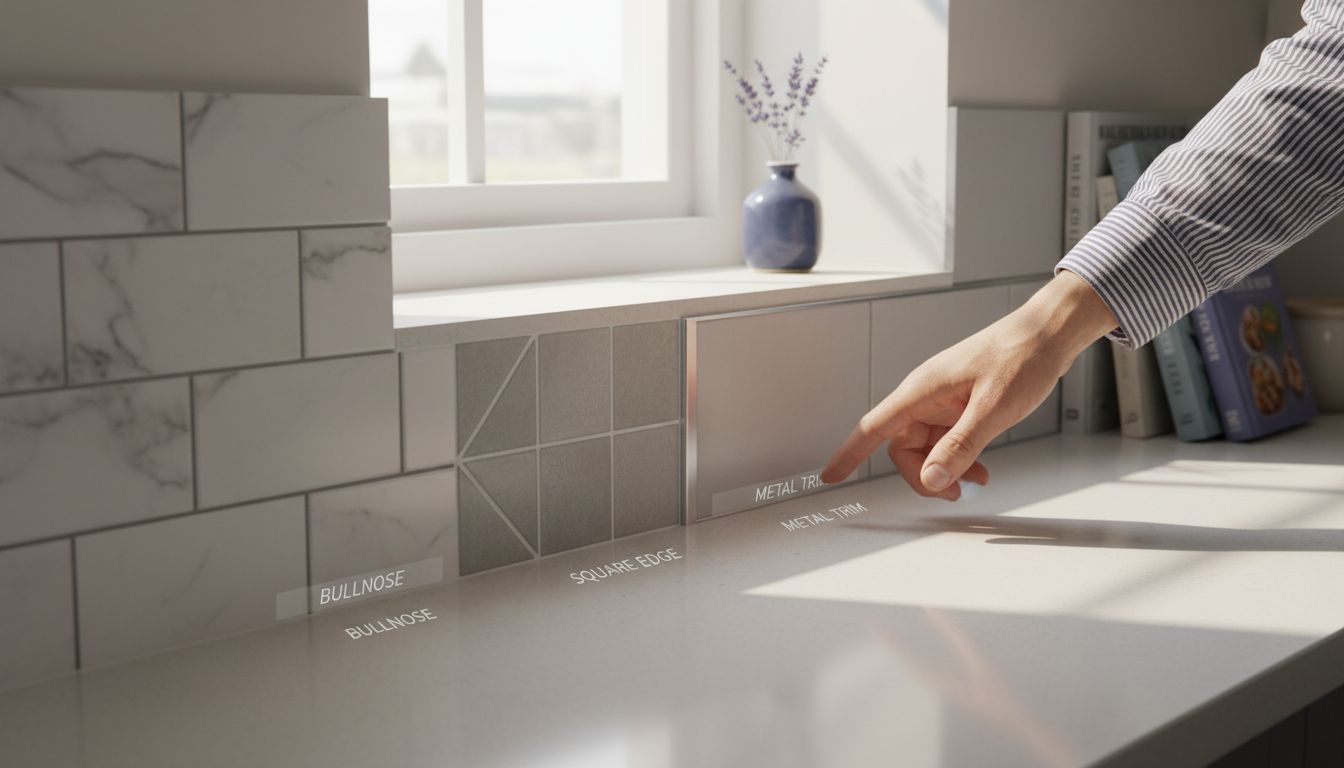
Bullnose Edges provide a smooth, rounded finish that eliminates sharp corners, making them particularly popular in residential spaces. These curved profiles soften tile transitions and reduce the risk of chipping or damage. Professional installers often recommend bullnose edges for areas with high foot traffic or where children and elderly individuals might encounter potential impact points.
Other prominent tile edge finish types include:
- Square Edge: Clean, modern appearance with straight 90-degree angles
- L-Shaped Trim: Ideal for protecting external tile corners
- Round Edge: Provides gentle curvature and minimises potential sharp contact points
- Metal Trim: Offers durability and contemporary aesthetic options
- Plastic Profile Trims: Lightweight and cost-effective solution
Choosing the right edge finish depends on multiple factors such as tile material, room function, safety requirements, and overall design aesthetic. Homeowners and designers must consider not just appearance, but also practical elements like moisture resistance, durability, and installation complexity.
For comprehensive insights into tile aesthetics, explore our guide on tile room finishes.
Choosing the Right Edge Finish for Tiles
Selecting the perfect tile edge finish requires careful consideration of multiple factors beyond simple aesthetics. According to National Tile Trims, the choice of trim material plays a crucial role in determining both durability and visual appeal, with options ranging from aluminium and stainless steel to brass.
Material Selection is paramount when choosing tile edge finishes. Each material offers distinct advantages: aluminium provides lightweight durability, stainless steel delivers corrosion resistance, and brass adds a touch of luxury. Professional tilers recommend matching the trim material to the specific environmental conditions and design requirements of your space.
Key considerations for selecting the right edge finish include:
- Room Moisture Levels: Higher humidity areas require more resistant materials
- Traffic Intensity: High-traffic zones need more robust edge protection
- Aesthetic Compatibility: Trim should complement existing design elements
- Budget Constraints: Material costs vary significantly
- Installation Environment: Indoor vs outdoor applications
Practical tip: Always test edge finish samples in your actual space before making a final decision. Lighting, surrounding colours, and room dimensions can dramatically impact how the trim appears and performs. Some homeowners opt for multiple trim styles within the same project to create visual interest and solve specific design challenges.
For more detailed insights into professional tiling techniques, check out our floor tiling workflow guide.
Installation Methods and Best Practices
Tile edge finish installation requires precision and careful technique to ensure a professional, long-lasting result. According to Schlüter, the process involves selecting the appropriate profile based on tile thickness and carefully embedding the anchoring leg into the adhesive for effective edge protection.
Preparation is crucial before beginning any tile edge trim installation. Professional tilers recommend thoroughly cleaning the surface, ensuring it is completely level, dry, and free from debris. This initial step prevents potential issues with adhesion and alignment that could compromise the entire installation’s integrity.
Key installation steps include:
- Measure Precisely: Calculate exact trim lengths before cutting
- Select Appropriate Adhesive: Match adhesive to tile and trim materials
- Align Carefully: Ensure straight, consistent positioning
- Press Firmly: Embed trim fully into adhesive layer
- Clean Immediately: Remove excess adhesive before it sets
Many DIY enthusiasts underestimate the complexity of tile edge trim installation. Professional results require not just technical skill, but an understanding of how different materials interact. Some trims need special cutting tools, while others demand specific application techniques. Patience and attention to detail make the difference between an amateur and a professional finish.
For comprehensive guidance on perfecting your tiling project, explore our wall tiling steps guide.
Common Pitfalls and Maintenance Tips
Maintaining tile edge finishes requires careful attention and proactive care. According to Schlüter, professionals recommend avoiding abrasive cleaning agents and removing any adhesive or grout from visible areas immediately to preserve the profile’s appearance and functionality.
Potential Issues can arise from improper installation or neglectful maintenance. Gradus emphasises that poor trim installation can lead to serious safety concerns, such as floor covering edges lifting and creating potential trip hazards. Regular inspection and prompt addressing of any emerging problems are crucial to maintaining both aesthetic appeal and structural integrity.
Common maintenance challenges include:
- Adhesive Residue: Clean immediately to prevent permanent staining
- Corrosion Risk: Use appropriate cleaning materials for specific trim metals
- Grout Line Integrity: Regularly check and repair grout around trim edges
- Physical Damage: Protect trims from heavy impacts or sharp objects
- Moisture Accumulation: Ensure proper sealing to prevent water ingress
Professional tilers recommend a quarterly maintenance routine that includes thorough cleaning, careful inspection, and immediate repair of any signs of wear or damage. This proactive approach can significantly extend the lifespan of your tile edge finishes, maintaining both their functional and aesthetic qualities. Remember that different materials require specific care techniques, so always consult manufacturer guidelines for your specific trim type.
For more comprehensive guidance on tile installation techniques, explore our wall tiling steps complete guide.
Achieve Flawless Tile Edge Finishes with Vividotiles
The challenge of selecting and installing the perfect tile edge finish can feel overwhelming. Whether you are seeking protection against chipping, creating seamless surface transitions, or enhancing your tile aesthetics with trims like bullnose or metal edging, Vividotiles understands the importance of both beauty and durability in your project. You deserve tile solutions that offer precision, style, and peace of mind for every step from selection to installation.

Explore our extensive collection of premium tiles at Vividotiles.co.uk and find the ideal styles and materials tailored to your unique needs. Benefit from expert advice, affordable prices, and free UK delivery on many products. Start transforming your space today by browsing our range and viewing tile inspiration in our new Harrogate showroom. Discover how the right tile and edge finish can bring your project to life at Vividotiles and deepen your understanding with our practical guides like wall tiling steps and floor tiling workflow. Take the first step towards a professional and lasting finish now.
Frequently Asked Questions
What is tile edge finish and why is it important?
Tile edge finish refers to the trims or finishing strips used at the edges of tiles. It serves to protect raw tile edges from damage, create smooth transitions between surfaces, conceal unfinished cuts, and enhance the overall aesthetic while improving safety by reducing edge irregularities.
What types of tile edge finishes are available?
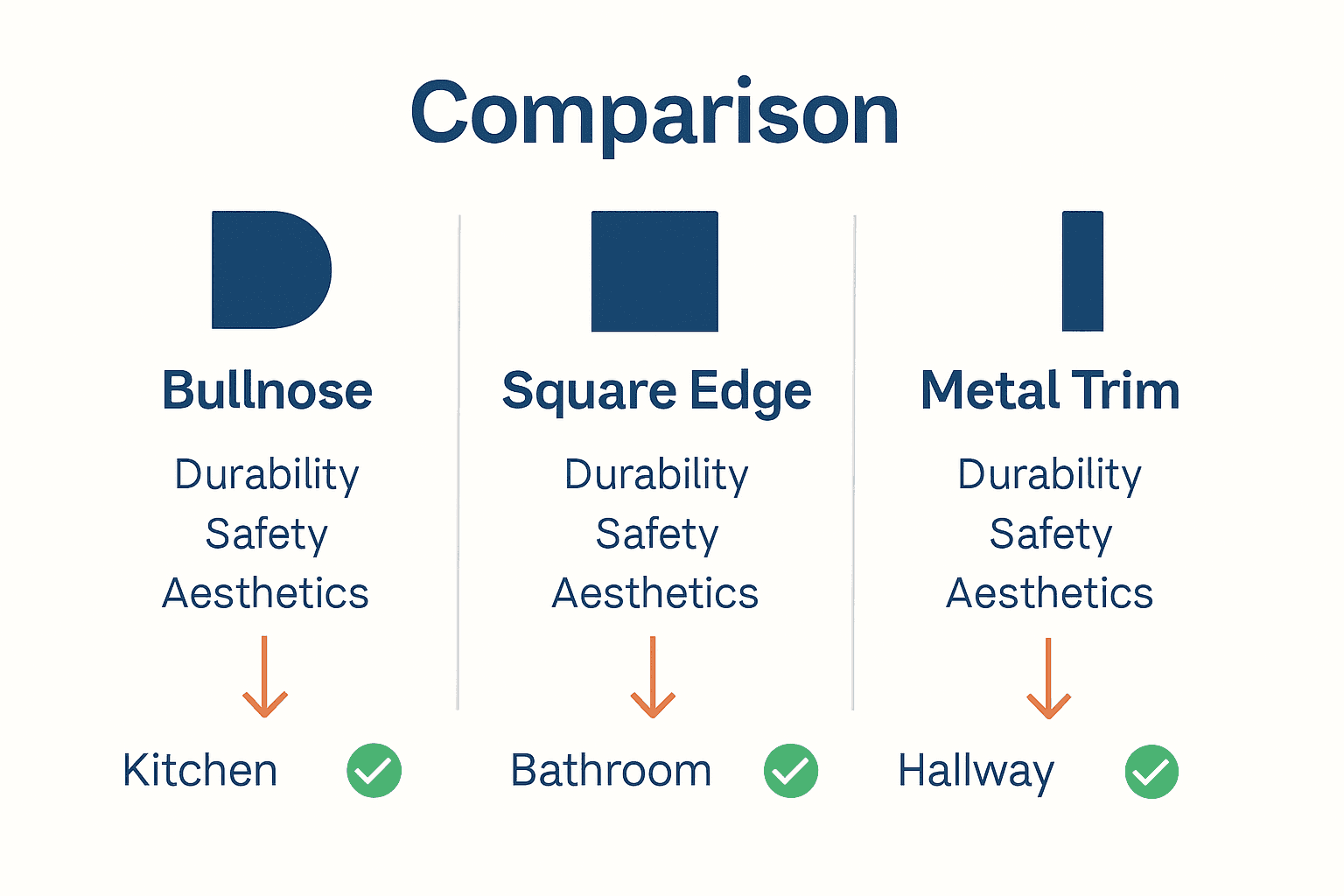
Common types of tile edge finishes include bullnose edges, square edges, L-shaped trims, round edges, metal trims, and plastic profile trims. Each offers unique visual and practical benefits tailored to various applications and design preferences.
How do I choose the right tile edge finish for my project?
When selecting a tile edge finish, consider factors such as the material of the tile, room function, safety requirements, aesthetic compatibility, and your budget. Additionally, assessing local moisture levels and traffic intensity can guide you in selecting the most suitable trim material for durability.
What are some common installation tips for tile edge finishes?
Key installation tips include measuring precisely before cutting, selecting the right adhesive that matches the materials, aligning the trim carefully for consistent positioning, pressing firmly to embed it into the adhesive, and cleaning any excess adhesive immediately to maintain a professional finish.